Now that we know we can use invertebrates to evaluate the quality of a given river, we need to understand the methodology to do it. And, as a picture is worth a thousand words, I will you show you the whole process with pictures from my recent field trip.
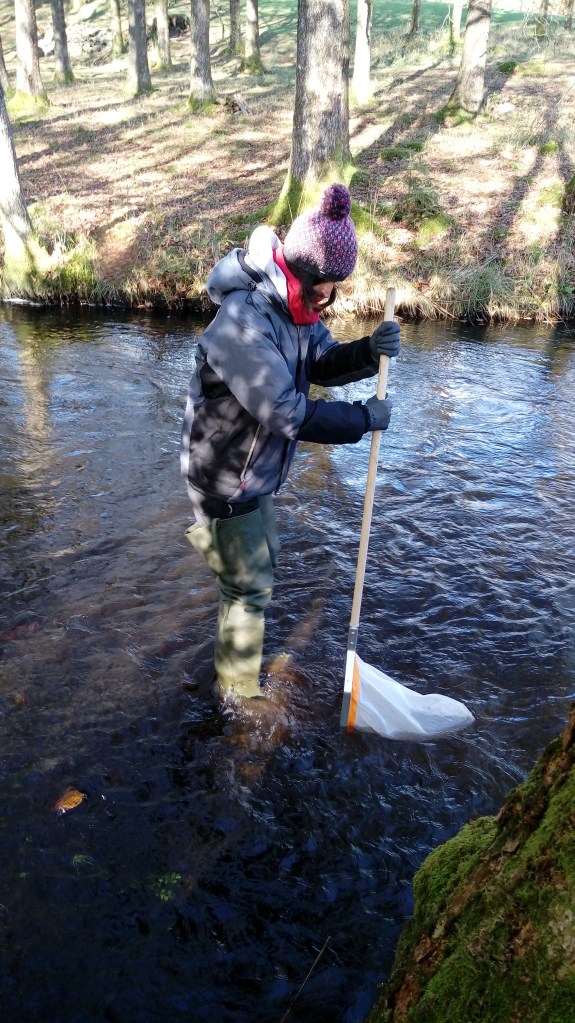
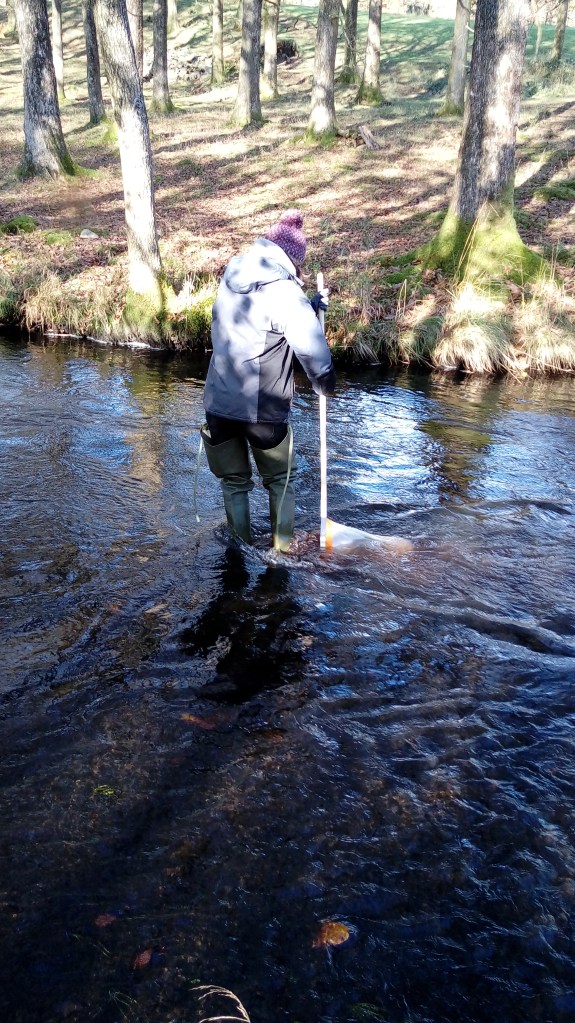
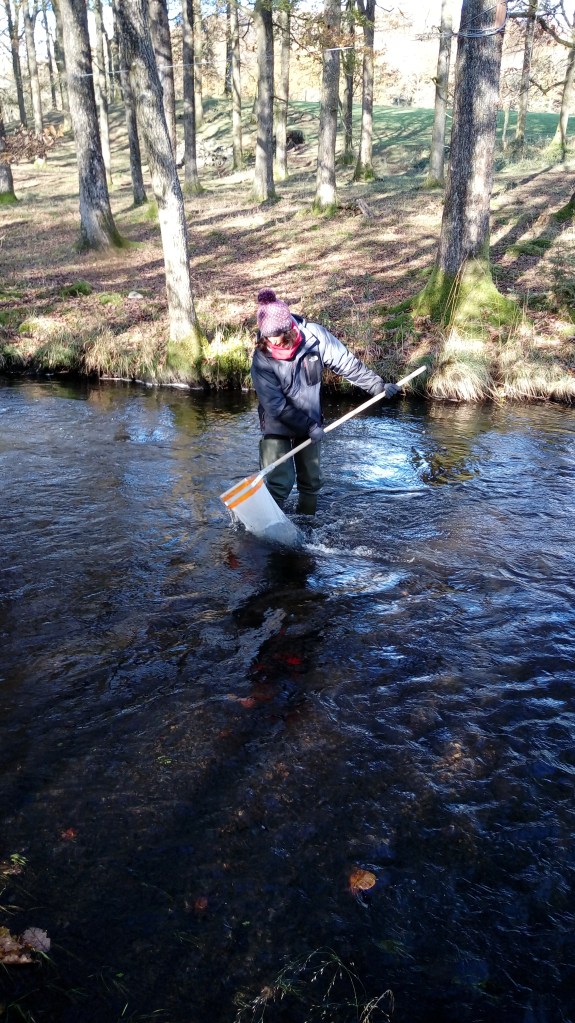
Firstly, we collect the samples using a technique called timed kick sampling (Everall N.C. et al, 2017). It consists on kicking the substrate of the riverbed and letting the current transport the macroinvertebrates downstream into a kick net that is being held at right angles to the flow with the open end facing upstream, as you can see on the pictures below. The kicking should be undertaken for 60 seconds in 3 different habitats of the chosen watercourse (Note: previous work should be done to identify the different habitats of the river, e.g.: pools, rapids, etc.; as different invertebrates dwell different habitats and all should be covered).
Then, we place what have been caught on the net into a white tray filled with a little quantity of river water and one by one we pick the macroinvertebrates with tweezers.
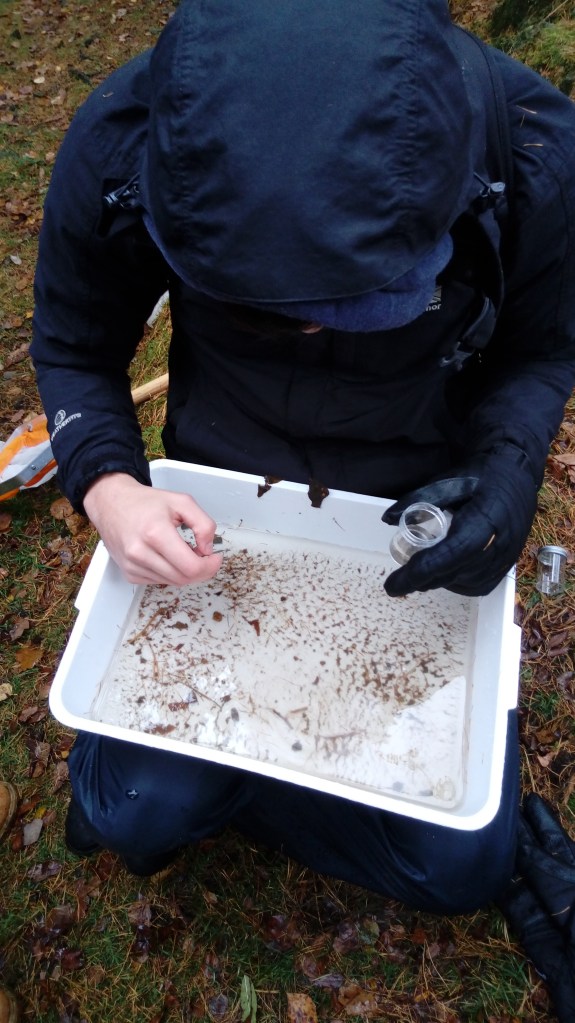
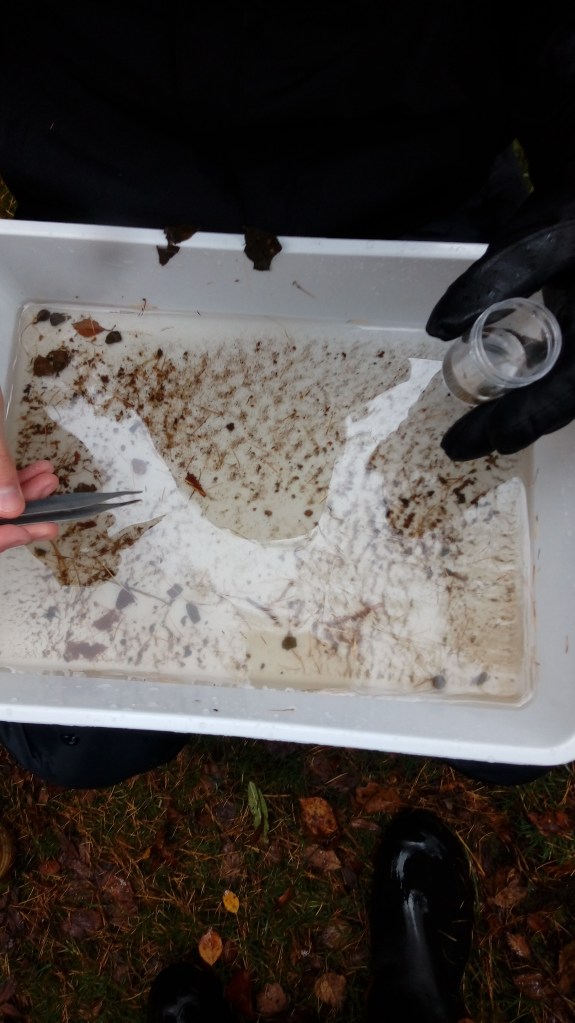
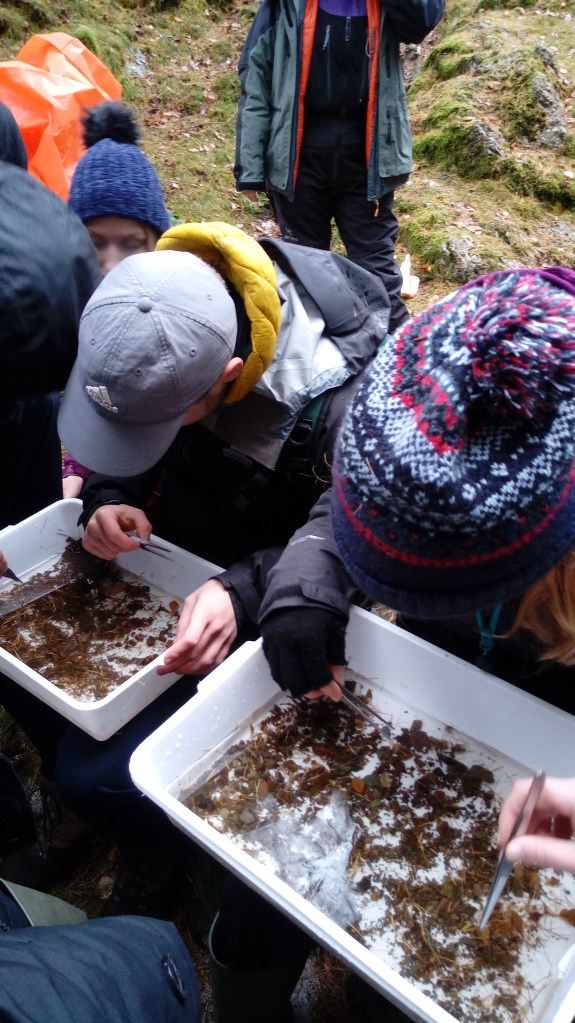
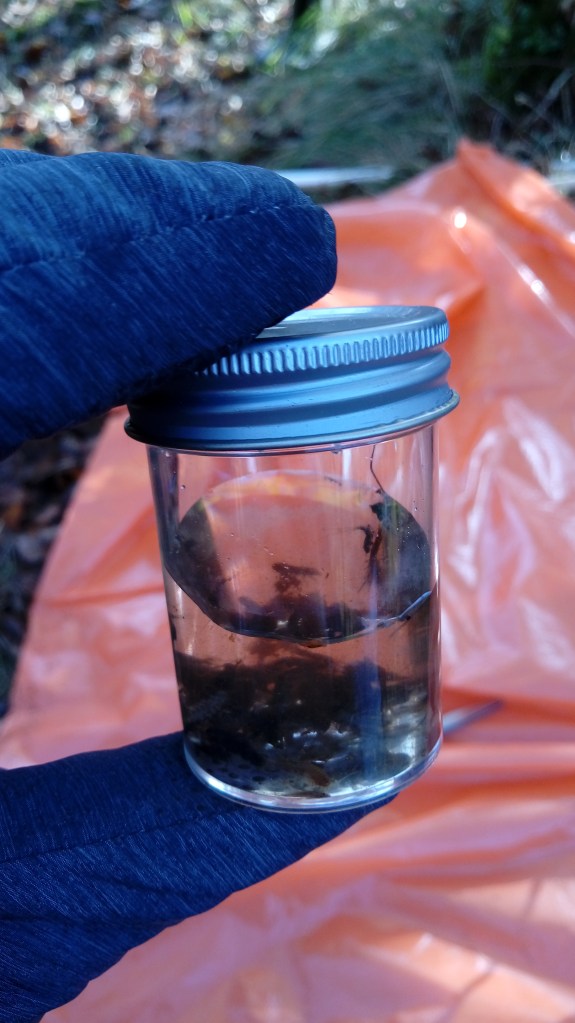
Finally, we place the invertebrates into little pots to help us identify them later in the laboratory and we fill the pots with ethanol-sucrose for preservation.
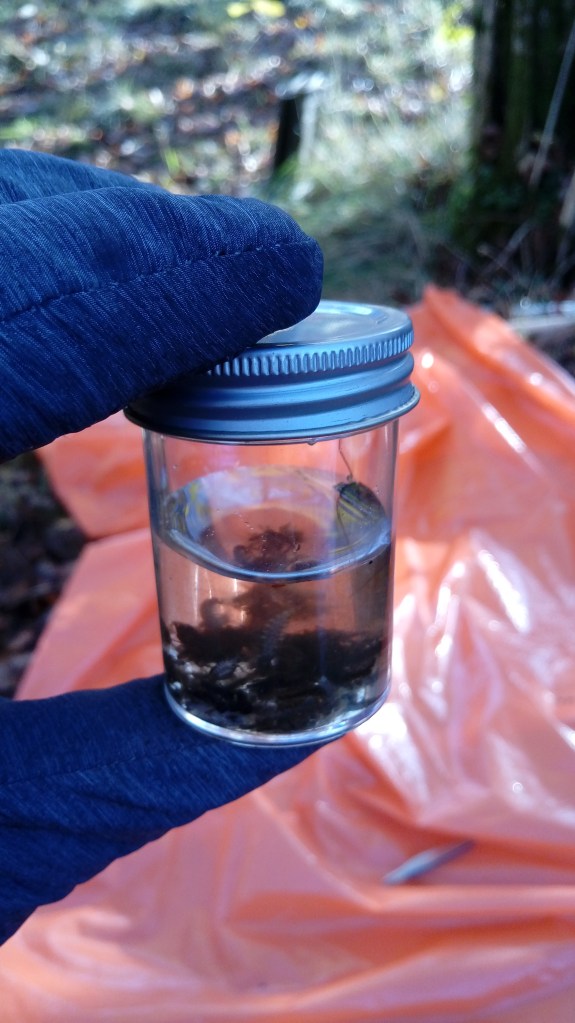
As you have seen, this methodology is quite simply and the equipment required is low-priced and easy to find: a kick net, a tray, a pair of tweezers and a fair amount of little pots. The next step is to investigate how we can apply our findings!
References:
- Everall N.C. et al. (2017) Comparability of macroinvertebrate biomonitoring indices of river health derived from semi-quantitative and quantitative methodologies. Ecological Indicators, vol. 78, pages 437-448.

